Home Depot Battery Recycling and What the Store Bins Take

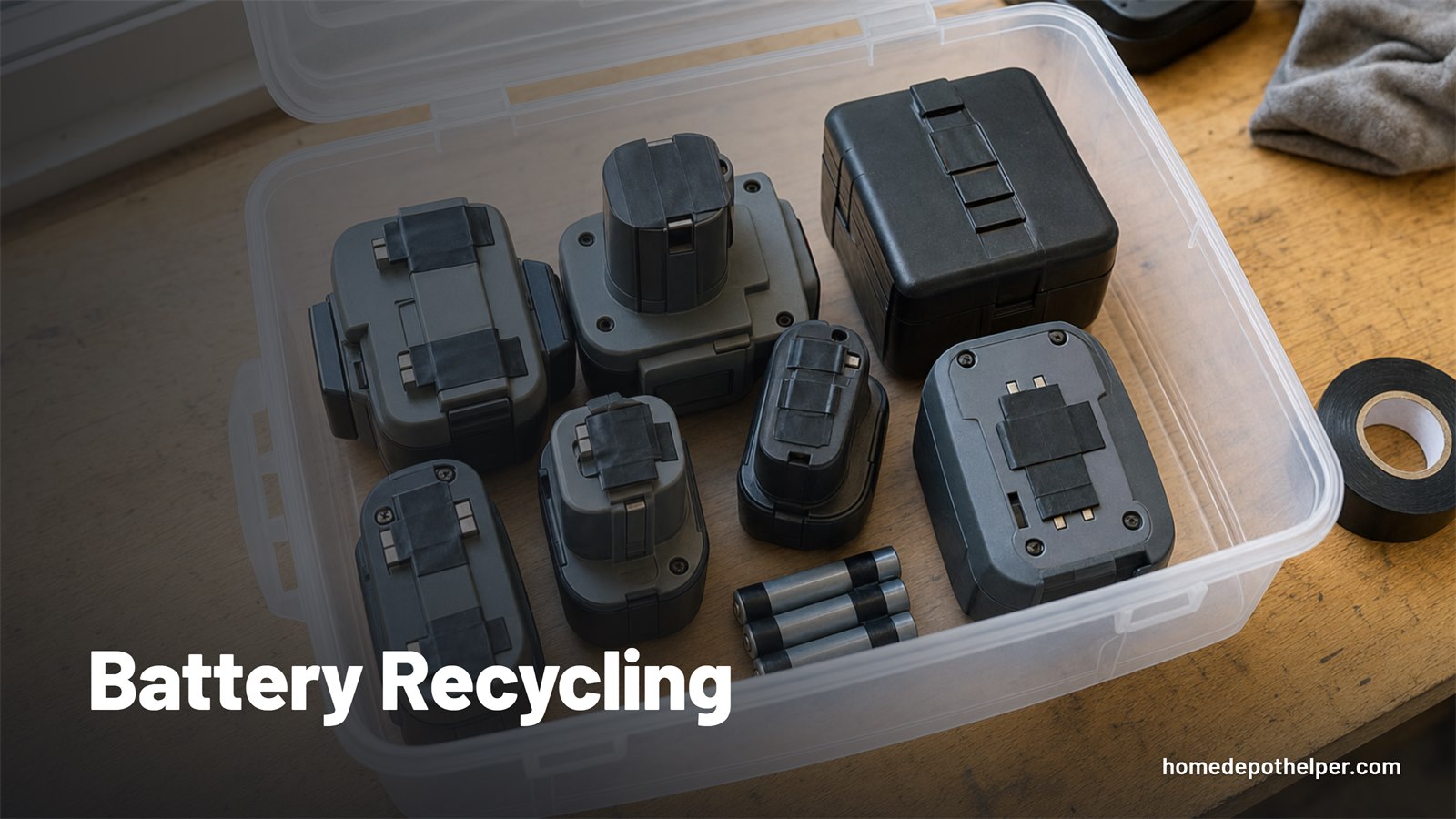
Home Depot battery recycling takes rechargeable batteries up to 11 pounds and under 300 watt-hours, dropped in a bin near the entrance or at the customer service desk.
Regular alkaline AA and AAA cells don’t go in that bin. Neither do car batteries or anything swollen or leaking.
Tape the ends or bag each battery first. Even a dead pack can hold enough charge to spark.
What the Home Depot Battery Bin Takes
The program covers rechargeable batteries in every U.S. store except those in Alaska and Hawaii, according to Home Depot’s sustainability site. Each battery has to weigh 11 pounds or less and come in under 300 watt-hours.
| Battery | In the Home Depot bin |
|---|---|
| Cordless tool and yard tool packs | Yes |
| Laptop and cellphone batteries | Yes |
| Rechargeable AA and AAA (NiMH, NiCd) | Yes |
| Small sealed lead-acid, like alarm backups | Yes, within the limits |
| Alkaline AA, AAA, C, D and 9-volt | No |
| Coin cells and single-use lithium | No |
| Car and other lead-acid vehicle batteries | No |
| Swollen, leaking or recalled batteries | No |
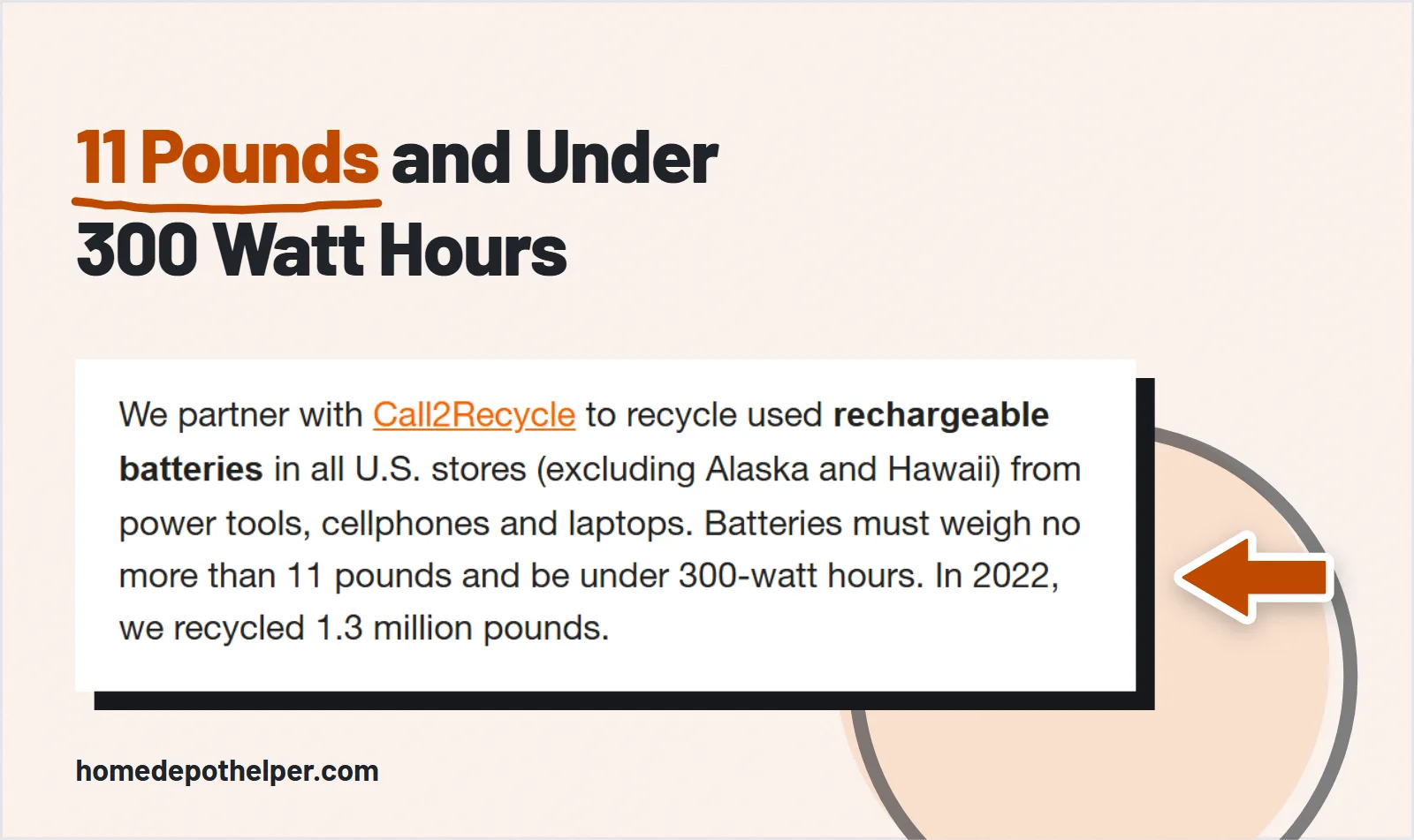
Home Depot’s own examples are batteries from power tools, cellphones and laptops. The rule underneath is broader: its corporate newsroom has described the program as taking any rechargeable battery within the weight and watt-hour limits, lithium included.
Checking the 300 Watt-Hour Limit
The watt-hour cap is the one that catches people. Many lithium packs print their watt-hours on the label. If yours doesn’t, multiply the volts by the amp-hours.
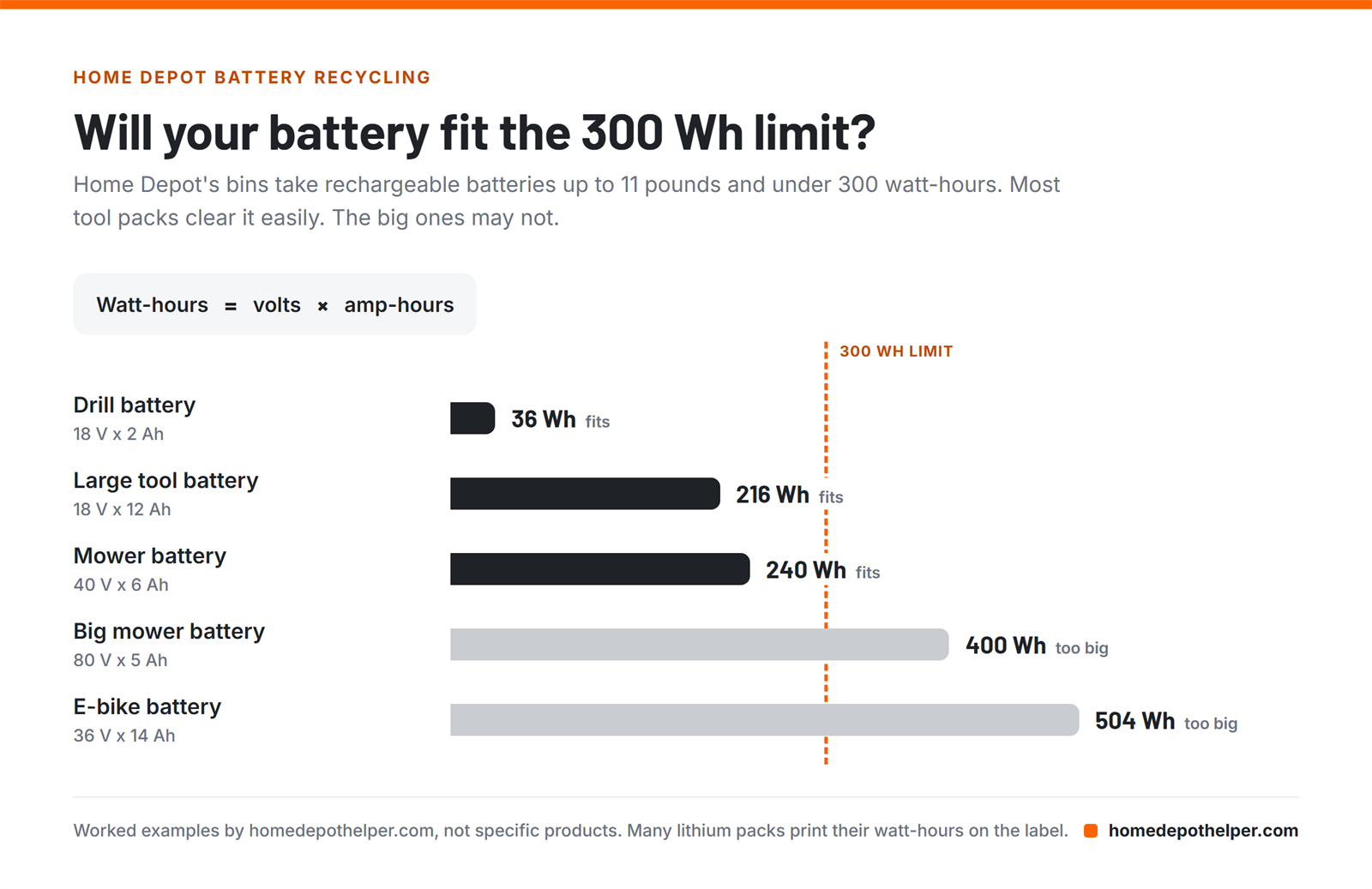
By that math, an 18-volt, 12-amp-hour tool battery comes to 216 watt-hours, so even the biggest common tool packs fit. An e-bike battery at 36 volts and 14 amp-hours is 504, well over.
Some brands print a “max” voltage that runs higher than the battery’s working voltage. Using it overstates the watt-hours, so a pack that passes the math with the bigger number passes at the bin.
E-bike packs that don’t make the cut have their own route. The Battery Network, the nonprofit behind the bins, runs separate programs for e-bike and other high-energy batteries.
How to Drop Off Batteries at Home Depot
- Cover the metal ends with non-conductive tape, such as electrical tape, or put each battery in its own plastic bag.
- Check the label against the 11-pound and 300 watt-hour limits.
- Find the bin. Most stores keep it near the entrance or at the customer service desk, but the spot varies, so ask an associate.
- Drop off a few at a time. There’s no strict cap, but the program suggests one to four batteries per visit.
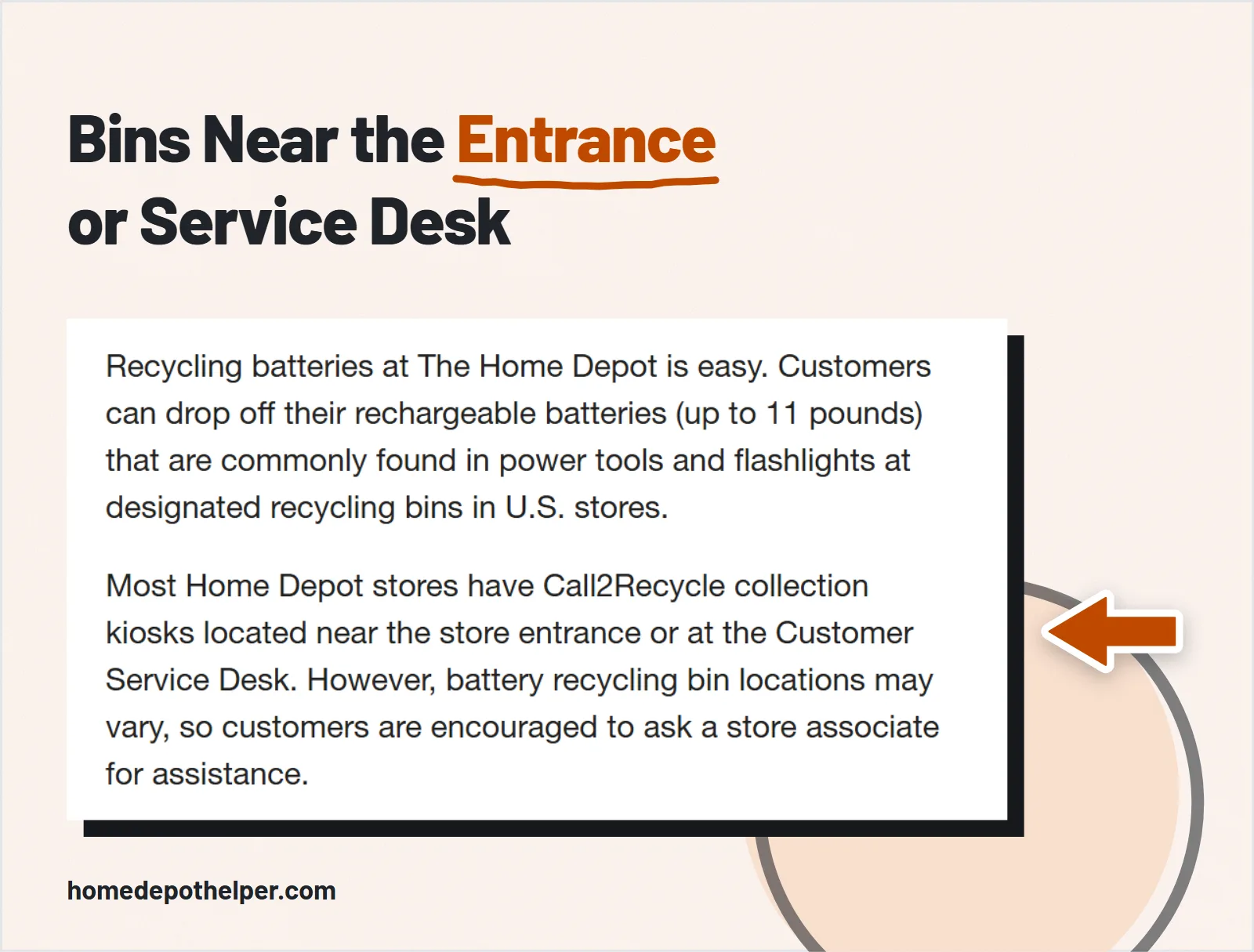
That’s Home Depot’s own description on its battery recycling page. The bins sit inside the store, so drop-off runs on your store’s Home Depot hours. Home Depot also says battery recycling is listed as a service on its website, so your store’s page is a quick check before the trip.
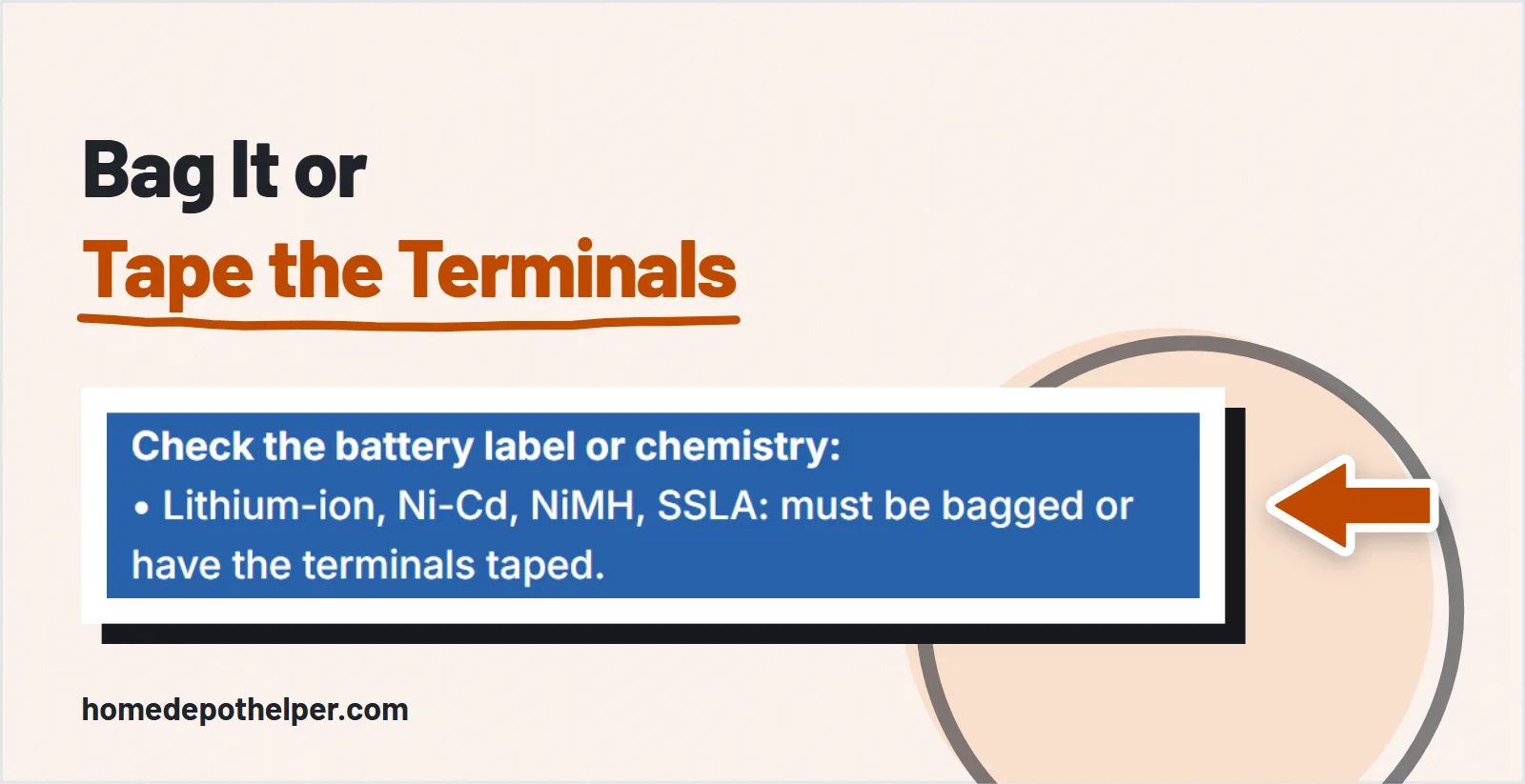
The taping step isn’t optional. The Battery Network’s rules say lithium-ion, NiCd, NiMH and small sealed lead-acid batteries must be bagged or have their terminals taped.
Between trips, Home Depot suggests keeping spent batteries in a plastic container, not a metal one, for up to six months. A lidded plastic tub in the garage, emptied on the next store run, beats loose packs rattling around in a junk drawer where their ends can touch.
Batteries Home Depot Won’t Take
Each of these has a better home, and the EPA’s battery guide says where.
Alkaline AA, AAA and 9-Volt
The EPA says that in most communities, alkaline and zinc-carbon batteries can go in household trash. It still recommends a battery recycler, and your local or state solid waste office has the final word.
Coin Cells and Single-Use Lithium
These shouldn’t go in the trash or a curbside recycling bin. Look for the word “lithium” on the battery, tape it, and take it to a household hazardous waste site or a store with a battery takeback. The EPA also warns that button cells are a swallowing hazard, so keep them away from small children.
Car and Other Lead-Acid Batteries
A lead-acid vehicle battery can hold up to 18 pounds of lead and about a gallon of corrosive sulfuric acid, the EPA says. Return it to a battery retailer or a household hazardous waste program, never the trash.
Swollen, Damaged or Recalled Batteries
A lithium-ion battery that’s swollen, leaking, overheating or punctured needs special handling, and recalled batteries aren’t accepted at The Battery Network’s drop-off sites at all. Contact the maker for its instructions.
Phones and Laptops With Built-In Batteries
If the battery doesn’t come out, don’t pry it out. A punctured lithium-ion battery counts as damaged, and the EPA’s advice for non-removable batteries is to take the whole device to a certified electronics recycler, a retailer with an electronics takeback or a local hazardous waste program.
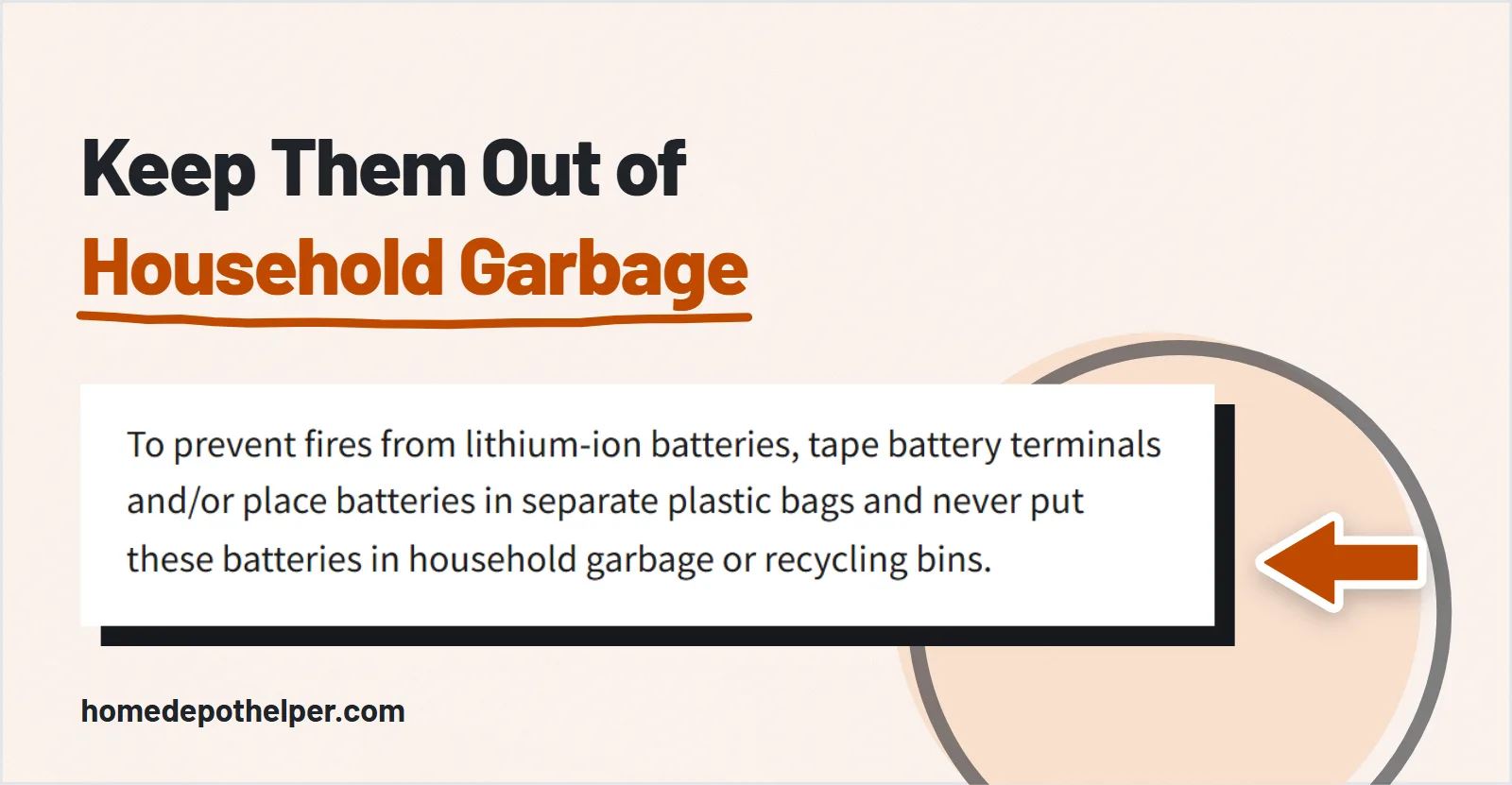
Never toss a lithium-ion battery in the household trash or the curbside recycling cart. The EPA warns that a lithium battery can spark and start a fire if it’s damaged or its ends touch.
Other Things Home Depot Recycles
The battery bin isn’t the only takeback. Home Depot also collects these:
- CFL bulbs. Unbroken compact fluorescent bulbs, at every U.S. store. Put each one in the plastic bag provided at the bin.
- Plastic shopping bags. Collected at most stores that still hand them out.
Empty propane tanks are a different case. They go back through the propane exchange when you swap for a full tank, not into a recycling bin.
Call2Recycle Is Now The Battery Network
The bins and Home Depot’s pages still say Call2Recycle, but the nonprofit renamed itself The Battery Network in early 2026. Its drop-off locator lists other sites near you if your store’s bin is full or missing.
Home Depot says the partnership has recycled more than 17 million pounds of rechargeable batteries, with over 1 million pounds collected in 2024 alone.
What comes out the other end is metal. Home Depot points to nickel and lead recovered for reuse, and the EPA notes that lithium-ion batteries also hold cobalt, lithium and graphite, which the U.S. Geological Survey lists as critical minerals.