Home Depot Propane Exchange Price and How the Tank Swap Works

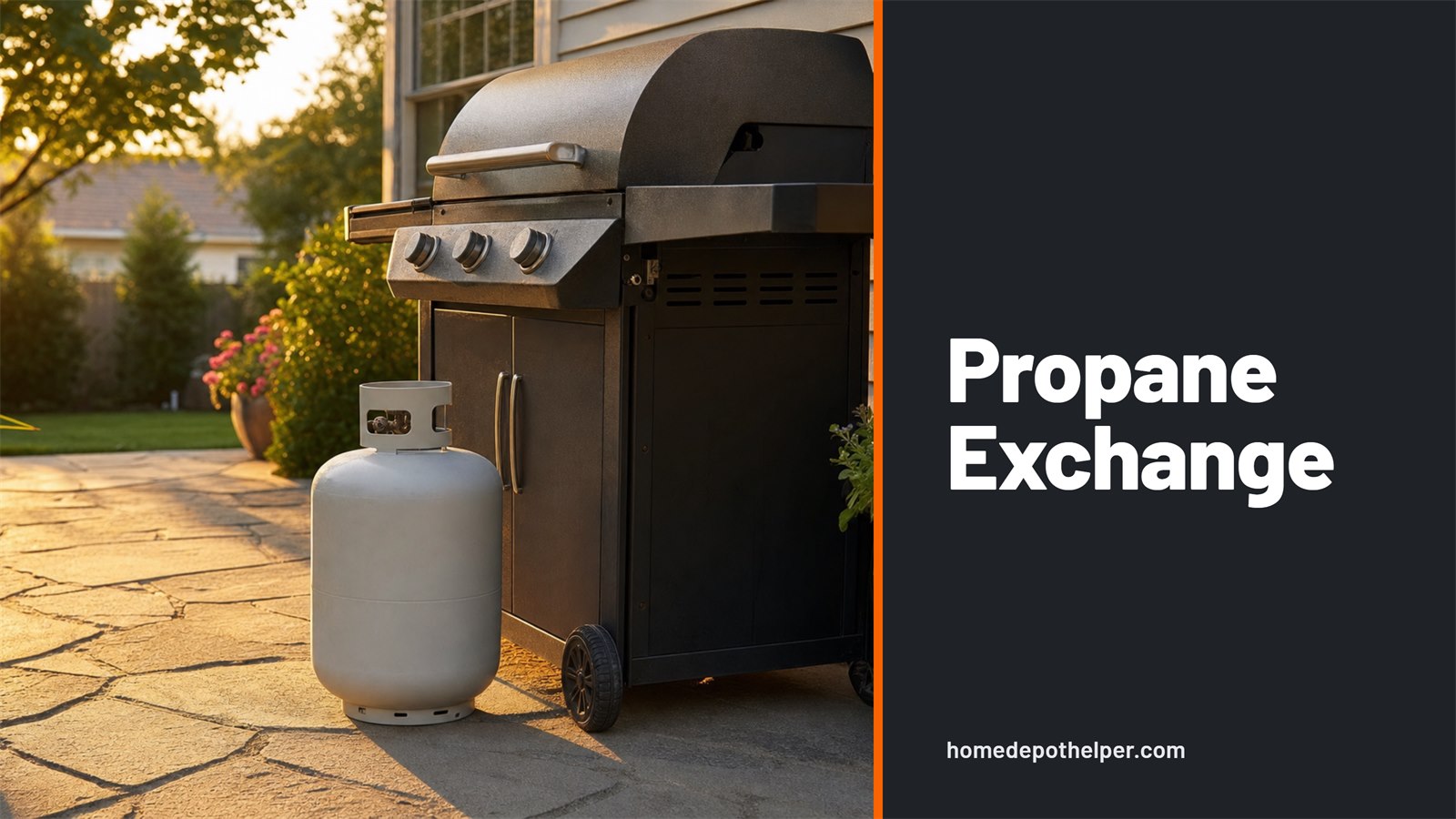
A Home Depot propane exchange cost $22.74 at an Atlanta store in May 2026, for a tank holding about 15 pounds of propane.
Buying a full tank with no empty to trade cost $69.77 at the same store. Prices vary by location.
Home Depot doesn’t list propane refills. The Atlanta store sold AmeriGas exchange tanks, and AmeriGas takes any old tank in trade.
Propane Prices at Home Depot
These are the prices Home Depot’s propane page showed for its Cumberland store in Atlanta on May 14, 2026, as saved by the Internet Archive.
| Item | Price |
|---|---|
| AmeriGas tank exchange | $22.74 |
| AmeriGas full tank, no exchange | $69.77 |
| Paraco full tank, no exchange | $69.77 |
| Bernzomatic 1 lb cylinders, 2-pack | $8.98 on sale, $11.98 regular |
| Bernzomatic 20 lb tank, empty | $64.93 |
| Flame King 30 lb tank, empty | $76.82 |
| Flame King 40 lb tank, empty | $138.99 |
| Flame King 100 lb tank, empty | $199.99 |
Your store’s price is on Home Depot’s propane tank listings once you pick your store, since prices are set locally.
A store’s exchange price barely moves, though. Archived copies of the same Atlanta listing show the swap at $22.74 in January 2025, May 2025, October 2025 and May 2026. Over that stretch, the full tank with no exchange went from $68.74 to $69.77, and the empty 20-pound Bernzomatic tank from $59.98 to $64.93.
So there’s no off-season deal worth waiting for on an exchange, at least at that store.
How the Exchange Works
Home Depot’s AmeriGas exchange page lays out the steps, and the first one is a safety rule.
- Leave your empty tank outside. Propane tanks never come into the store.
- Pay the cashier for an exchange, or a purchase if you have no tank to trade.
- Follow the attendant to the exchange cage outside.
- Swap your empty for a full tank when the cage is opened.
Before you leave home, close the tank valve and disconnect the tank from the grill. Only the cylinder goes to the store.
Some stores have self-serve lockers instead. Shoppers in the product reviews describe scanning a code with the Home Depot app, paying in the app and letting the locker swap the tanks, with no associate needed.
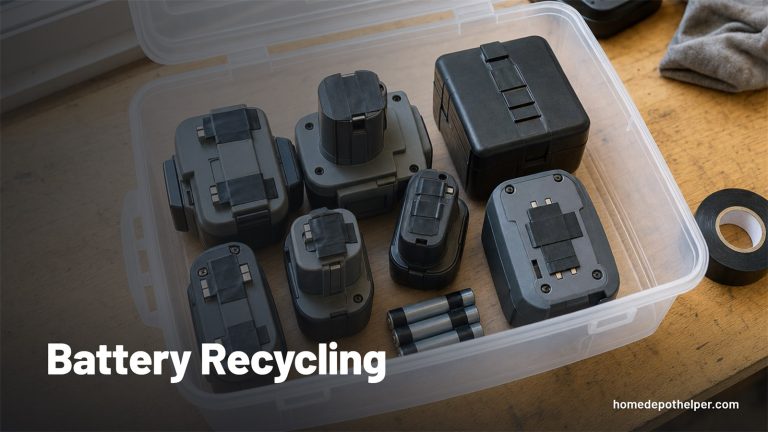
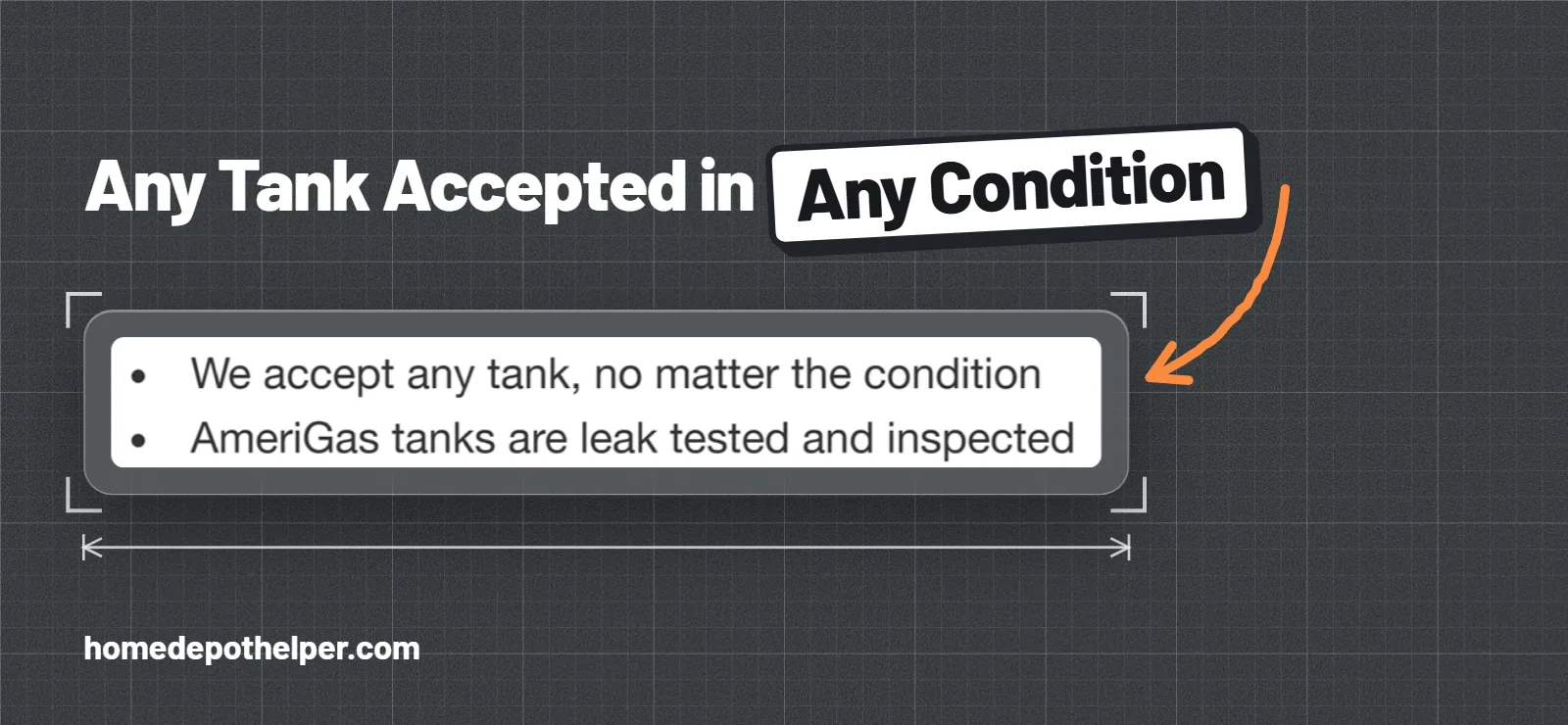
The page also promises AmeriGas accepts any tank in trade, whatever its condition, and that its tanks are leak tested and inspected. That makes the exchange a handy way to retire a rusty old cylinder, and the same trip can clear out dead tool batteries, since most stores keep a battery recycling bin near the entrance or service desk.
Exchange or Refill
An exchange tank holds about 15 pounds of propane, according to Home Depot’s listing, even though grill cylinders are sold as 20-pound tanks. That gap is the main argument for refilling instead.
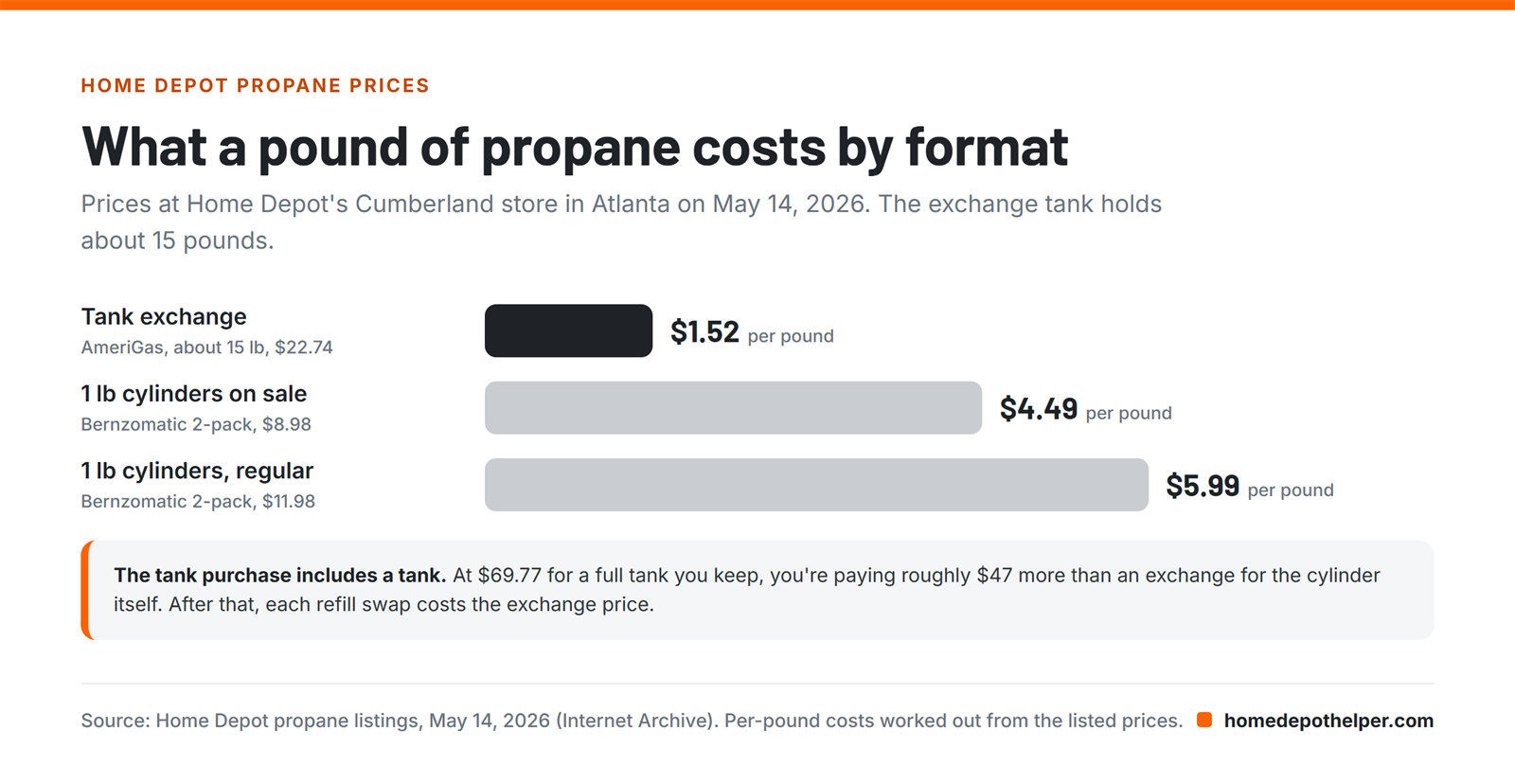
Worked out from the Atlanta price, the exchange comes to about $1.52 a pound. The 1-pound camping cylinders cost three to four times as much per pound, which only makes sense for a portable stove or torch.
Refills aren’t something Home Depot lists, so a refill means a propane dealer or another store with a filling station. A refill fills the tank to its rated capacity instead of about 15 pounds, which is worth pricing locally if you grill every weekend. If you grill a few times a season, the two-minute swap is hard to beat.
Here’s the benchmark worked out from the Atlanta price. At $22.74 for 15 pounds, a 20-pound refill needs to cost under about $30 to beat the exchange per pound.
Buying a Tank Outright
Without an empty to trade, the full-tank purchase is the way in. At $69.77, it costs about $47 more than an exchange, which is effectively the price of the cylinder you keep.
An empty 20-pound tank cost $64.93, only a few dollars less, and it still needs filling somewhere else. For a first grill tank, the full purchase is the better deal. If you already own a tank, skip it, since the exchange gets you the same propane for $47 less.
The larger 30, 40 and 100-pound tanks are sold empty for heaters, generators and bigger appliances. Those go to a propane dealer for filling.
Checking How Much Propane Is Left
Home Depot’s exchange listing gives you what you need to check a tank with a bathroom scale. Each tank holds about 15 pounds of propane and weighs about 31 to 34 pounds as sold.
That puts an empty exchange tank at roughly 16 to 19 pounds. A tank that weighs 24 pounds still has about half its propane, worked out from those figures, so there’s no need to swap it early.
A gauge saves the weighing. Home Depot’s propane listing includes a 20-pound cylinder sold with a built-in gauge, and gauges that fit between the tank and the grill hose do the same job.
Old or Out-of-Date Tanks
Grill tanks don’t last forever. AmeriGas says a tank needs recertification between 5 and 12 years after its manufacture date, which is stamped into the collar.
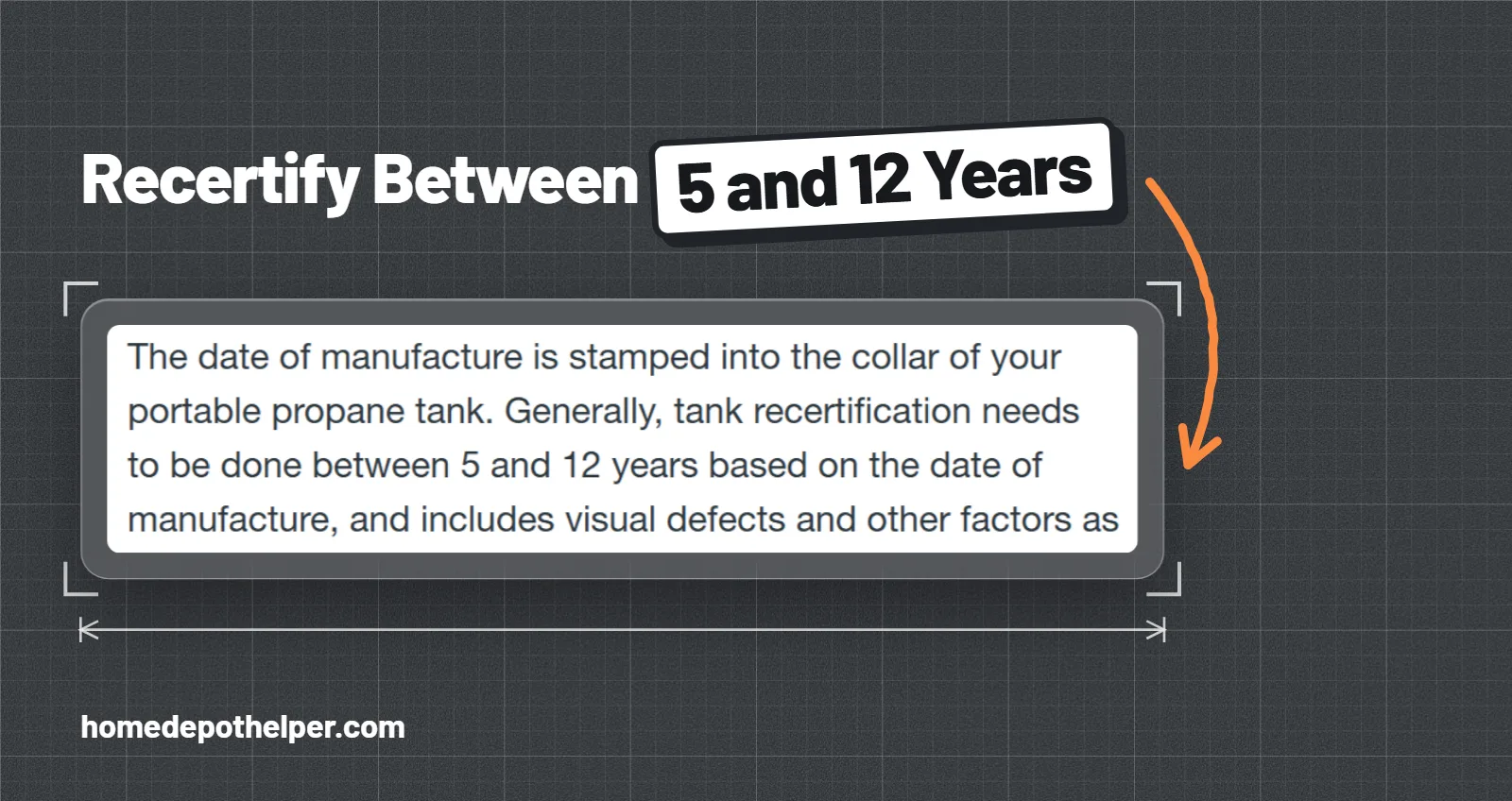
A refill station can turn away a tank that’s past its date. The exchange is the easy way out, since AmeriGas takes any tank in trade and says its exchange tanks have already been recertified.
Very old tanks can have a second problem. Under the National Fire Protection Association’s code, in effect in most states since April 1, 2002, a refilled cylinder needs an overfill prevention device, or OPD. El Dorado County, California, notes that tanks without one can’t be refilled by anyone.
An OPD valve has a triangular handwheel. Some earlier round-wheel valves have one too, with “OPD” stamped on the brass. A tank without one still goes in the exchange cage like any other.
Getting the Tank Home Safely
The Consumer Product Safety Commission’s grill safety guidance is short and worth following on the drive home.
- Keep the tank upright and secured, not rolling on the floor of the car.
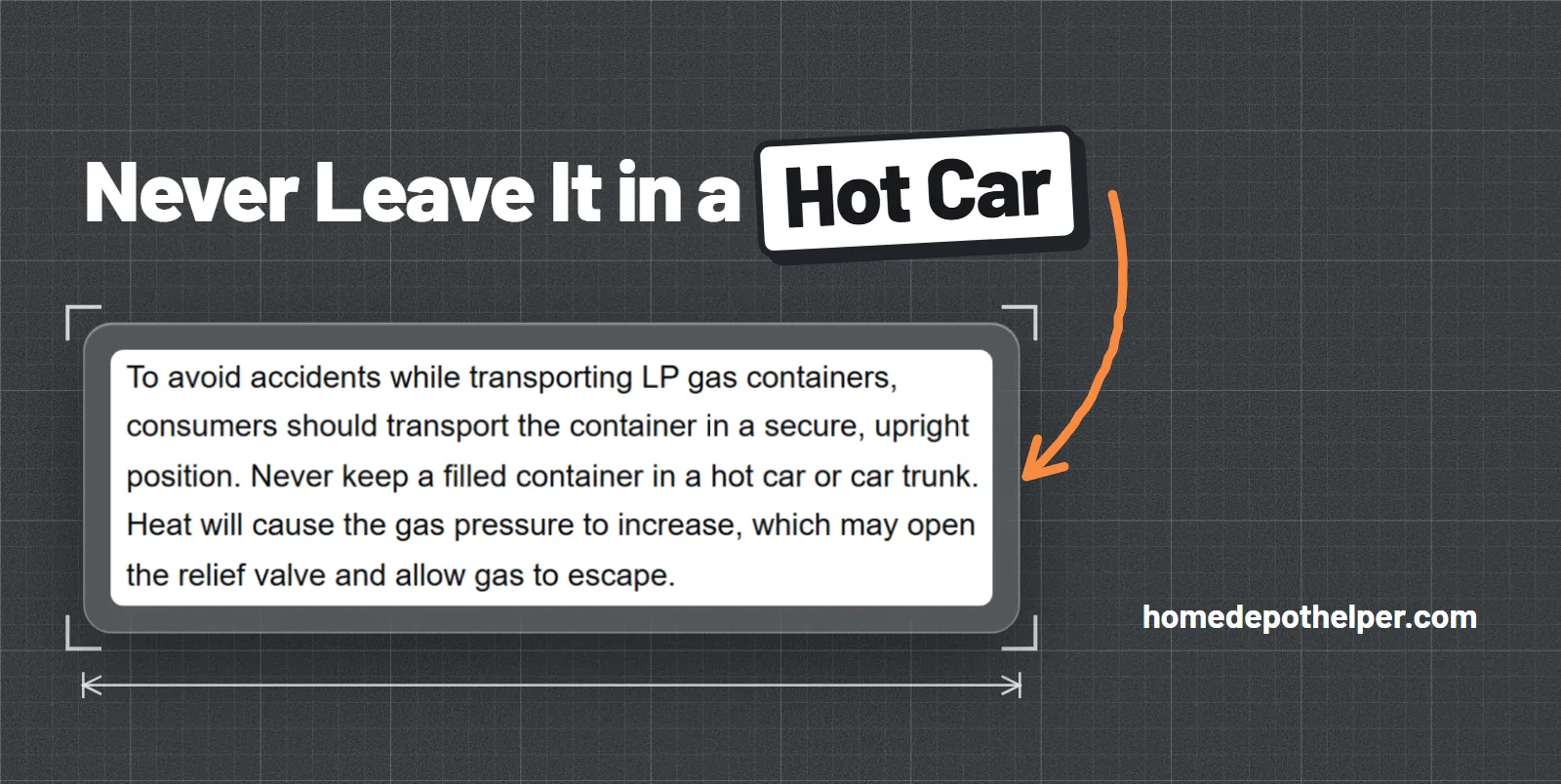
- Go straight home. A filled tank shouldn’t sit in a hot car or trunk, because heat raises the pressure and can open the relief valve.
- Store spares outdoors, never inside the house or under the grill.
Leak Check at the Grill
The swap ends at the grill, and reconnecting is the moment the Consumer Product Safety Commission singles out for a leak check.
- Check the hose for cracks, brittleness, holes and leaks, and replace a scratched or nicked connector.
- Connect the tank the way the grill’s manual describes. The commission says to follow the maker’s instructions every time a tank goes on or comes off.
- Check for leaks after reconnecting, again using the manual’s method.
- If you find a leak, turn off the gas and don’t light the grill until it’s fixed.
Once it’s lit, the commission also says to keep the grill at least 10 feet from the house or any other building, and never to repair a tank valve yourself.
Returning Propane Gear
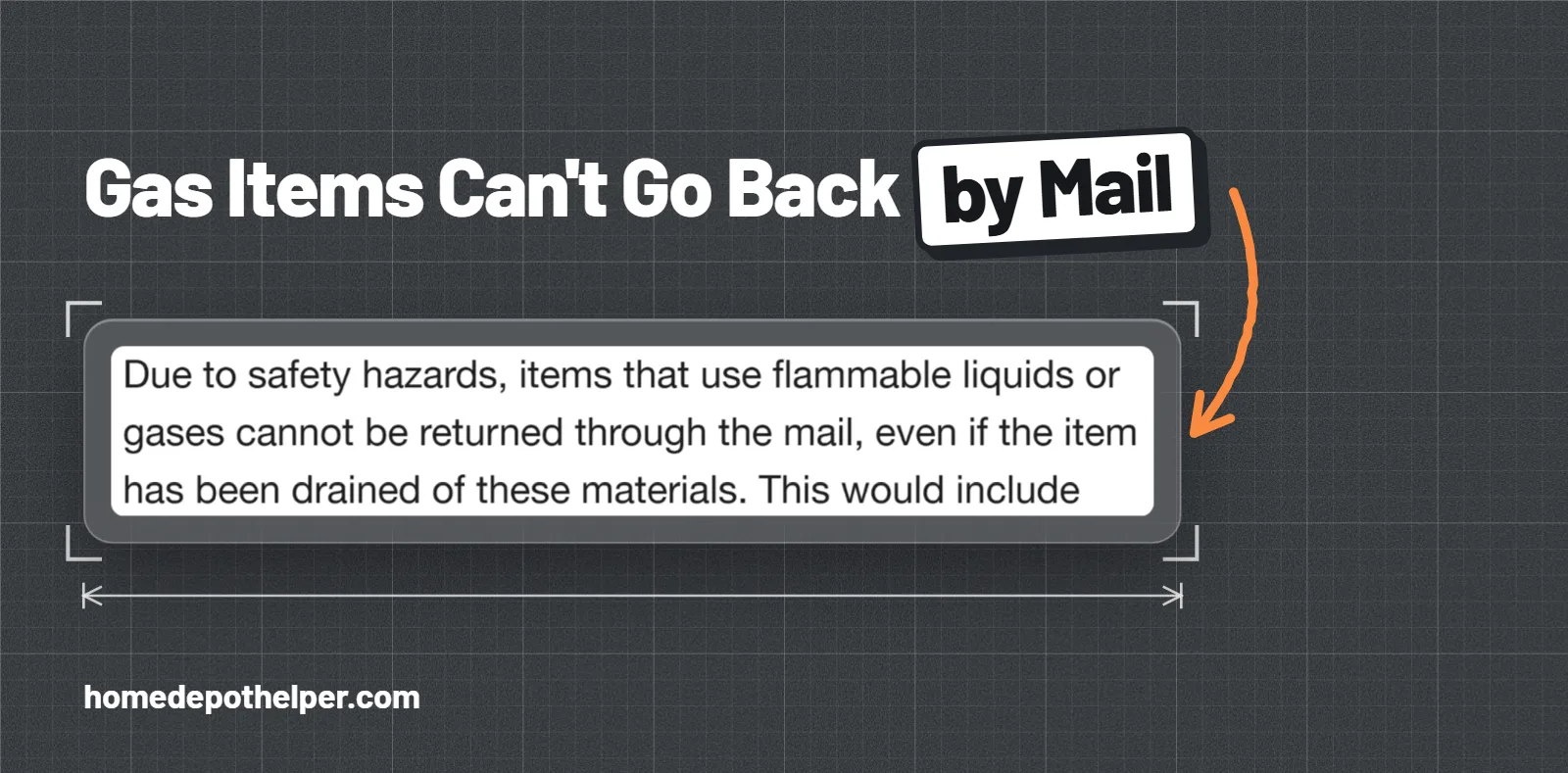
Anything that uses flammable gas has to go back to a store. Home Depot’s return policy bars mailing it, even after it’s been emptied, and that covers grills, heaters and other propane equipment bought online.
Plan exchange trips around store hours. The Home Depot hours guide covers when your store opens, and the holiday hours matter if you’re planning a Thanksgiving turkey fry.