Home Depot Tax Exempt ID Registration and Checkout Rules

Home Depot tax exempt shopping runs on a Home Depot Tax ID you register for online and give at checkout, in stores or on homedepot.com.
Businesses, government agencies and nonprofits can apply, and Home Depot says approval typically takes a few business days.
The ID doesn’t create an exemption. Your state’s law decides that, and a personal purchase won’t fit it.
Who Can Register
Home Depot’s tax-exempt purchases page is aimed at tax-exempt pros and government buyers, and its FAQ names businesses, government entities and nonprofit organizations. You need to hold tax-exempt status already.
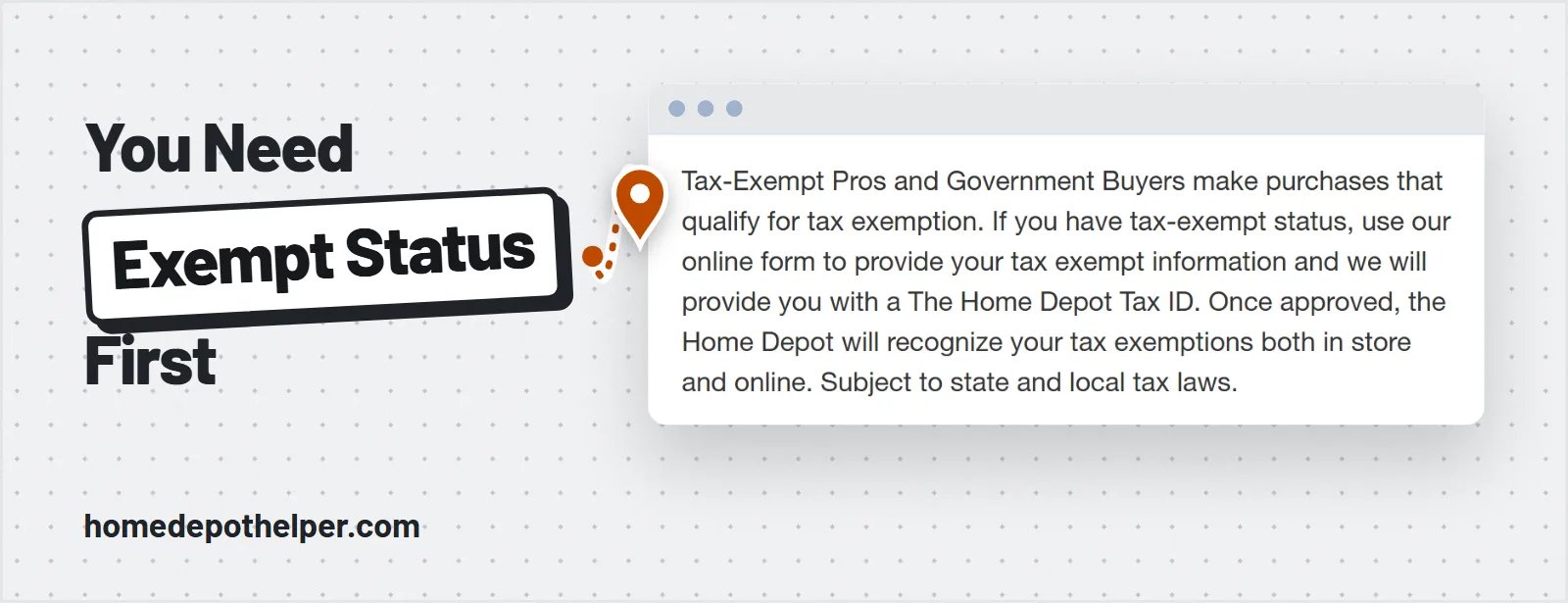
An ordinary federal tax ID isn’t the same thing. Plenty of businesses have an employer ID number and still owe sales tax on what they use. What counts is a state exemption, or a federal status your state accepts.
Here’s how that looks by buyer, using the examples I could verify.
| Buyer | What they use | Example |
|---|---|---|
| Federal agency | Federal Government Purchase Card | Recognized instantly |
| State government | Home Depot Tax ID | Iowa’s state buyers |
| College or university | Home Depot Tax ID | Iowa State University |
| Church or charity | Home Depot Tax ID, backed by a state exemption | Depends on the state |
| Business | Home Depot Tax ID | Only where state law exempts the purchase |
Resellers can be turned away. Home Depot’s Pro Xtra terms reserve the right to reject a tax-exempt application from anyone buying products to sell rather than use, though materials used on a project for someone else don’t count as reselling.
This is also separate from the 10% military discount, which is a price cut for individual shoppers, and from a Home Depot Commercial Account, which is a way to pay.
Registering for the Tax ID
Home Depot’s FAQ says to gather three things before you fill in the online form:
- Your organization’s tax identification number
- Its legal business name
- Documents proving your tax-exempt status
The steps themselves are short.
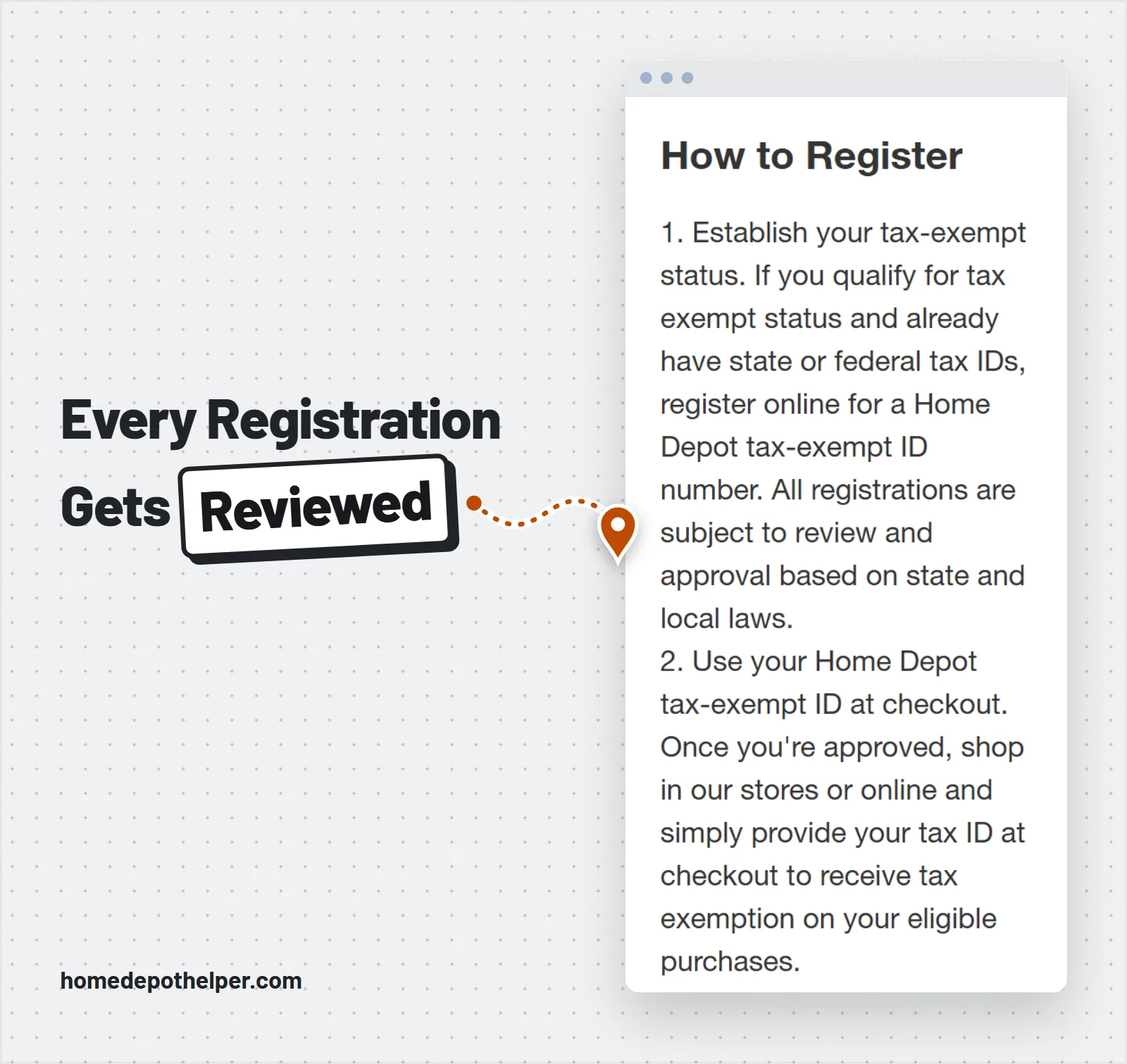
Every registration gets reviewed against state and local law, so approval isn’t automatic. Since it can take a few business days, I’d register a week before a big purchase rather than the morning of it.
Make the names line up first. Texas wants the name on your IRS letter to match your legal name, and it asks for a current verification letter if the IRS letter is more than four years old. Home Depot’s form asks for that same legal name.
Registration letters that Cisco College and George Washington University posted, from 2017 and 2016, show what came back then. Each had a 10-digit Tax ID, a clip-out card for the cashier, and a table listing the state, the state ID number and the reason for exemption.
The format may have changed, but that state-by-state table is the useful part. If you buy in two states, I’d make sure your registration covers both.
Using the ID at Checkout
In a store, you give the ID number at checkout, and Home Depot says it’s recognized instantly. Online, its FAQ says to use the ID during checkout. The FAQ also says stores can help with tax-exempt forms, if you’d rather ask in person. Iowa State’s procurement office describes the store side this way.
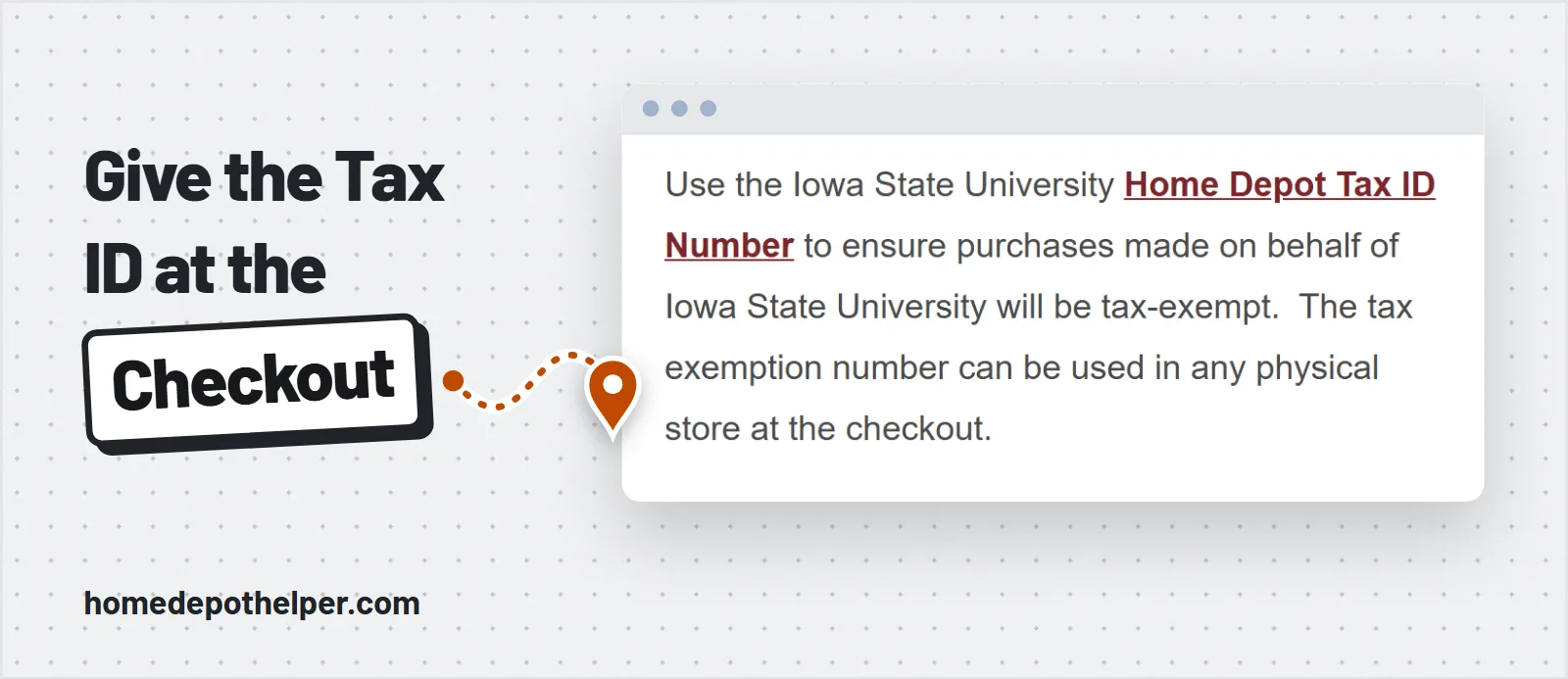
Don’t mix it up with Pro Xtra. Iowa’s state buyer guide lists two separate numbers: a Pro Xtra phone number at the register for program discounts, and the Home Depot Tax ID for the exemption.
Federal buyers have a shortcut. A Federal Government Purchase Card that bills an agency directly is recognized instantly, in store or online, according to Home Depot. Government Account Support is at (866) 589-0690.
What Your State Still Controls
Home Depot’s own wording is “subject to state and local tax laws.” That’s where the real answer sits, and the same nonprofit can get different answers across a state line.
| State | What the tax agency says |
|---|---|
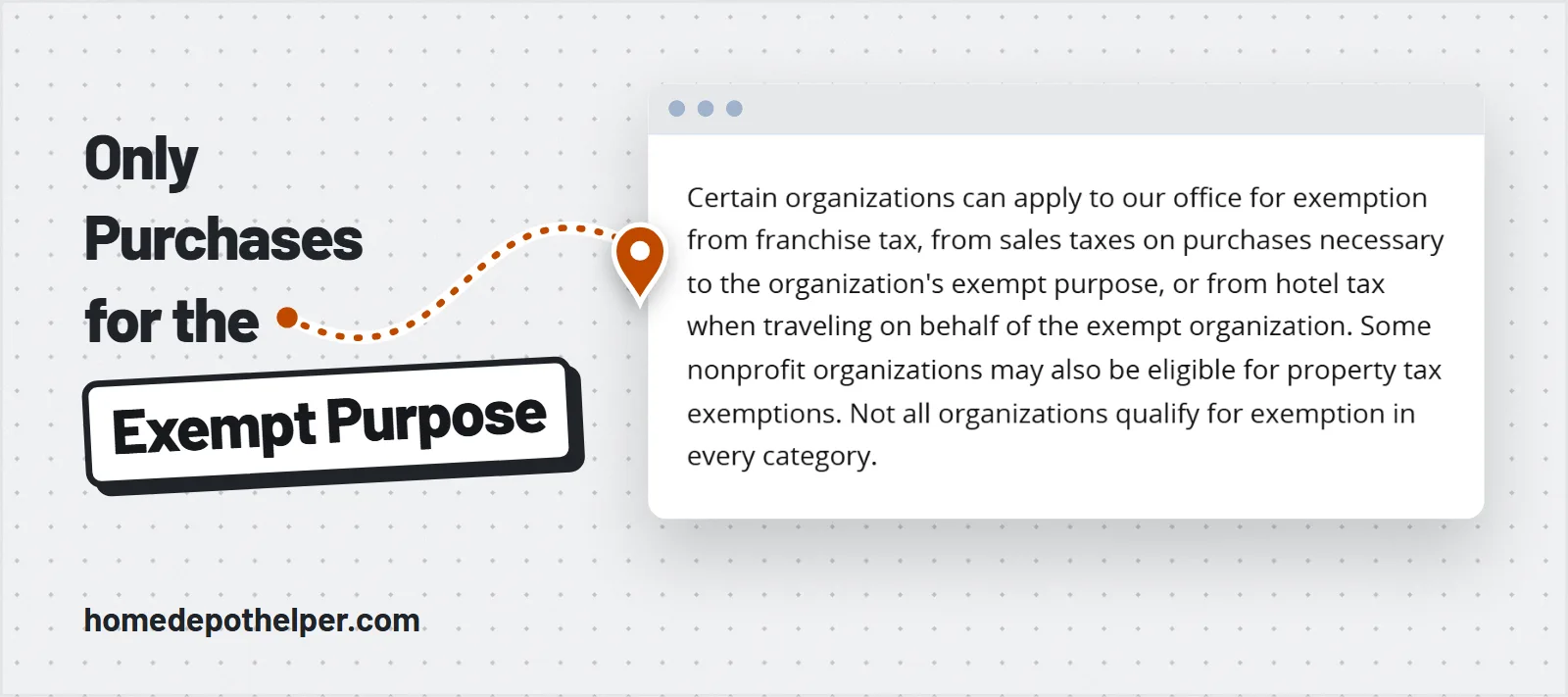
| Texas | 501(c)(3) groups can apply on form AP-204, for purchases necessary to the exempt purpose |
| California | No general sales and use tax exclusion for nonprofits, only specific exemptions |
| Alabama | Exempt entities other than government need a state certificate, renewed every year |
The Texas Comptroller sets that limit in its first lines on exempt organizations.
California is the one that catches people out. A charity with a federal 501(c)(3) letter can still pay sales tax on a Home Depot order there, because CDTFA Publication 18 says nonprofit purchases are generally taxable unless a specific exemption fits.
Exemptions can also lapse. Alabama’s certificates last one year, and a group that misses the renewal can’t make tax-free purchases until it’s reinstated. The Diocese of Chicago’s Illinois certificate, by comparison, runs until September 1, 2028.
So Home Depot’s approval isn’t the last word. Here’s how I’d think about the order of things.
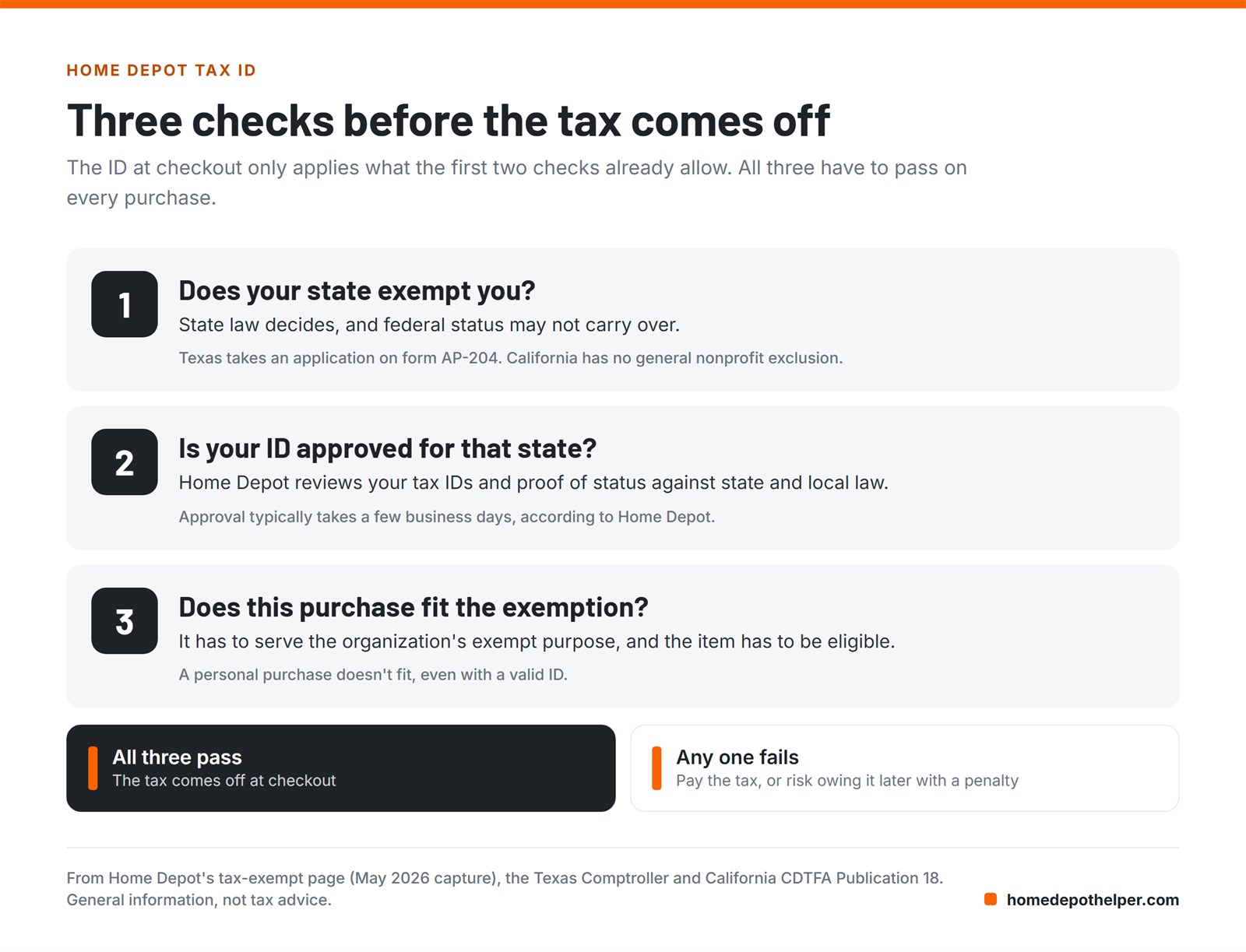
Personal Purchases and Penalties
The exemption belongs to the organization, not to the person at the register. Iowa State’s wording is purchases made “on behalf of” the university. The Episcopal Diocese of Chicago tells its parishes the exemption fits items used at church or church functions, and furniture and equipment the church owns.
Using it on your own kitchen can get expensive. Alabama’s rule adds a civil penalty for intentional misuse of a certificate, on top of the tax owed: at least $2,000, or twice the tax if that’s greater.
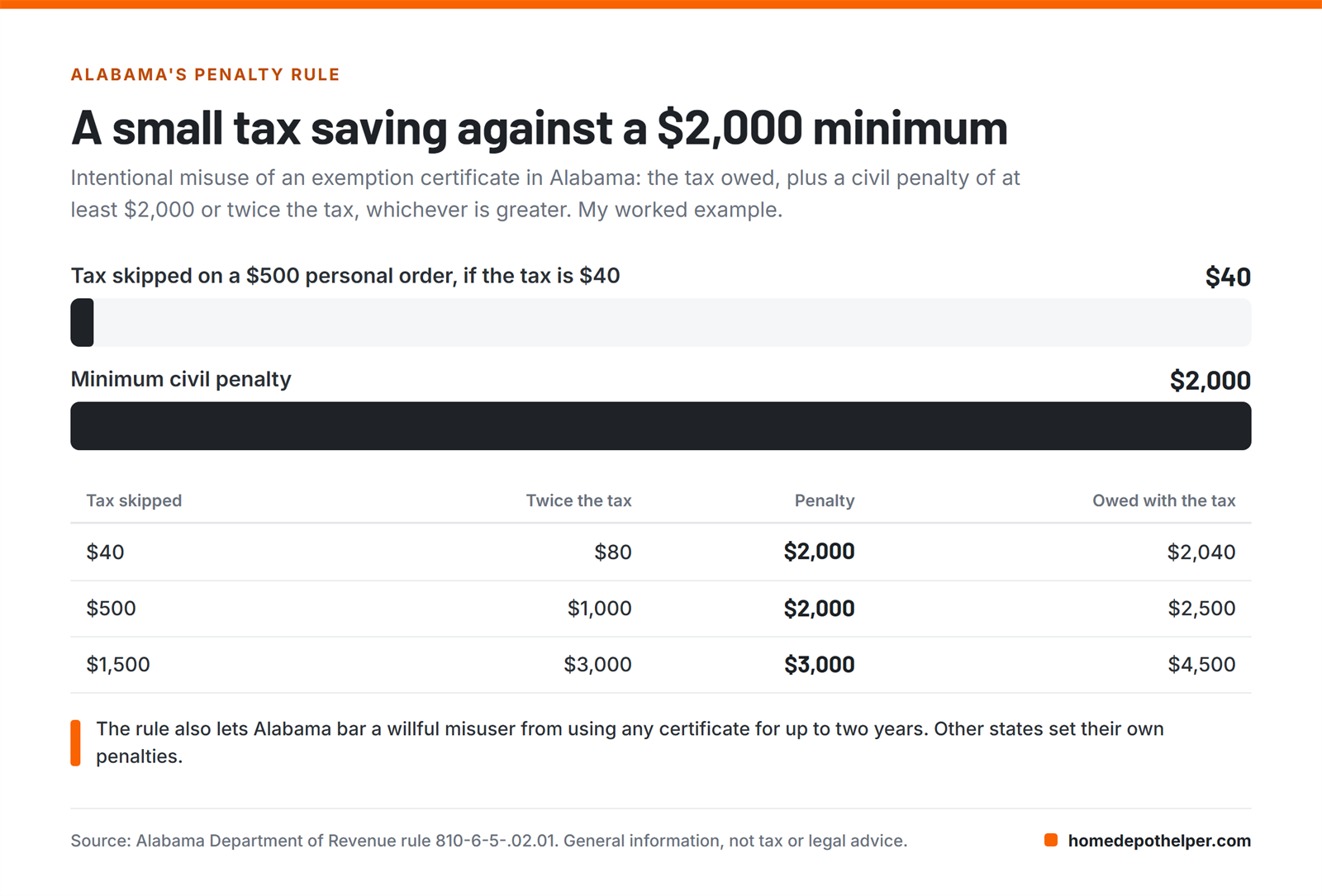
That’s one state’s number, not a national one. But it shows the size of the bet, and I can’t think of a $40 saving that justifies it.
Questions Home Depot Leaves Open
The pages I could read don’t settle a few things that come up often:
- How to get the tax back if you forget the ID at the register
- Whether the exemption reaches Tool Rental, delivery or installed services
- Whether a contractor can use a customer’s exemption on that customer’s job
- How long an approved ID lasts before it needs renewing
Ask before you count on any of those. Home Depot’s tax department is at (877) 434-6435, Monday through Friday from 9 a.m. to 5 p.m. Eastern. That line is separate from the main customer service numbers.
For the state side, your state’s revenue department has the final word. At a hypothetical 8% rate, a one-time $200 supply run saves $16, which may not justify the paperwork. A $5,000 roof saves $400, and if your organization buys here every month, I’d register once and be done with it.